

What is crowdfunding fulfillment, and why does it matter for Canadian brands?
Crowdfunding fulfillment is the end-to-end process of packing, shipping, and managing backer rewards after a campaign closes. It is not standard eCommerce. You collect pre-orders upfront, manufacture in bulk, then ship thousands of orders at once to backers spread across multiple countries. That spike is where most campaigns run into trouble.
For Canadian brands, the complexity compounds quickly. Cross-border shipping, customs duties, domestic carrier selection, and bilingual packaging requirements all add layers that a typical Shopify store never faces. Getting this right before your campaign goes live is what separates a smooth launch from a months-long support nightmare.
The core elements every Canadian brand needs to address:
- Fulfillment model selection: self-fulfillment, direct fulfillment, domestic 3PL, or a hybrid approach
- Packaging design: right-sized cartons that protect the product and keep dimensional weight low
- Carrier network: national carriers like Canada Post, FedEx, UPS, and Purolator, plus regional options like Intelcom for last-mile delivery
- Customs and HS codes: accurate documentation to avoid inspection delays at the border
- Warehouse management: a system like Shiphero, built specifically for direct-to-consumer fulfillment, keeps order accuracy high at volume
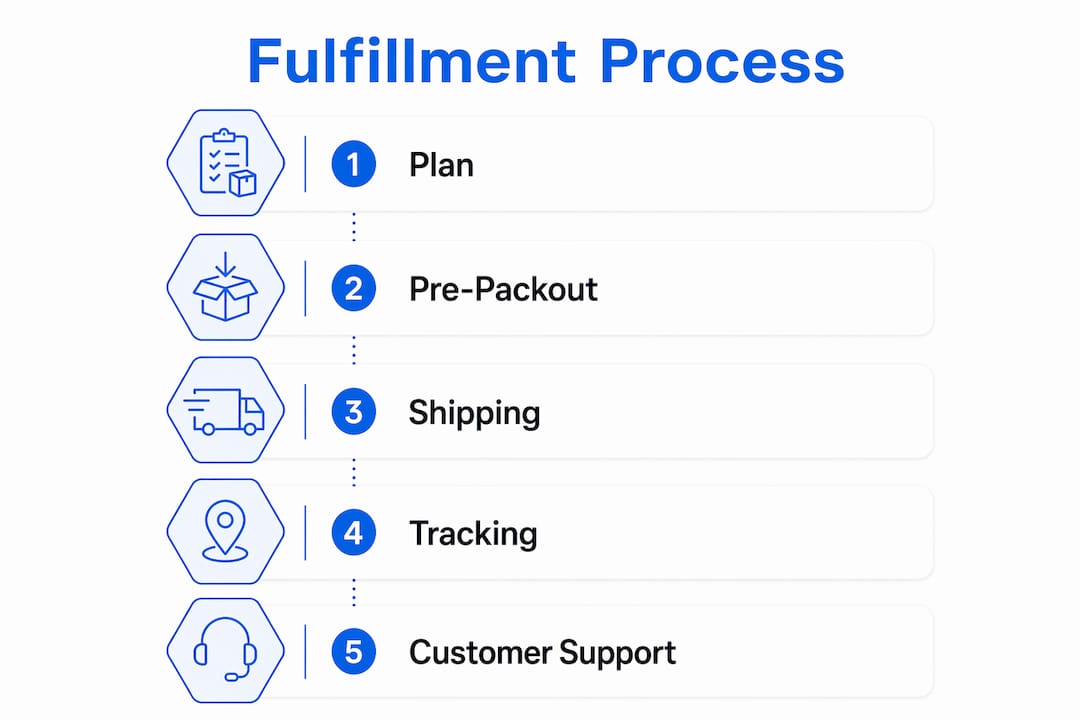
- Fulfillment timeline: production, freight, customs clearance (typically 1–2 weeks with clean paperwork), warehouse receiving, and last-mile delivery each add time that creators routinely underestimate
Table of Contents
- How to prepare your crowdfunding fulfillment before campaign launch
- How Shiporo supports scalable crowdfunding fulfillment in Canada
- Key takeaways
- FAQ
How to prepare your crowdfunding fulfillment before campaign launch
Kickstarter’s May 2026 creator guide makes the point plainly: most fulfillment problems can be mitigated before your campaign goes live. Decisions about shipping models, duty handling, estimated delivery dates, and fulfillment partners should all be locked in before a single backer pledges.
Here is what that preparation looks like in practice:
- Lock your fulfillment model early. Choosing the right model depends on where your backers are concentrated, your cash flow, and your SKU count. A domestic 3PL works well when most backers are in Canada; direct fulfillment or a hybrid handles international distribution more efficiently.
- Design packaging for protection and cost. Right-sized cartons reduce dimensional weight charges, and drop testing before production reveals breakage risks. Every extra insert or layer of bubble wrap adds seconds to pack time and dollars to your shipping bill across thousands of orders.
- Forecast demand by scenario. Plan for conservative, expected, and optimistic pledge tiers. Tie each tier to pallet counts, kitting hours, and daily carrier pickups so your 3PL is not caught off guard by the post-survey surge.
- Sort out customs documentation now. International shipments require accurate HS codes, country of origin, and valuation. First-time importers are almost always selected for customs inspection, which can add weeks and exam fees to your timeline.
- Integrate your pledge manager with your 3PL. Pledge managers handle address updates, add-ons, and CSV exports that feed directly into warehouse pick lists. Manual re-entry at this stage is where errors compound across thousands of orders.
- Budget with a contingency buffer. Treat fulfillment as its own budget category covering storage, kitting, packing materials, freight, duties, and returns, then add a 10–15% buffer for currency swings and surcharges.
- Decide on DDP vs. DDU upfront. With Delivered Duty Paid, you cover customs charges and backers receive their package without surprise fees. With Delivered Duty Unpaid, backers pay on arrival, which is one of the most common sources of international fulfillment complaints.
Pro Tip: Before you publish your campaign shipping costs, do a physical packout of every reward tier. Box it up with actual inserts and bubble wrap, measure the final carton, and run it through real carrier rate comparisons. Dimensional weight pricing can destroy thin crowdfunding margins if your cost estimates are based on product weight alone.

How Shiporo supports scalable crowdfunding fulfillment in Canada
Running a crowdfunding campaign is already a full-time job. The last thing you need is to also manage daily pick-and-pack operations, carrier negotiations, and customs paperwork.
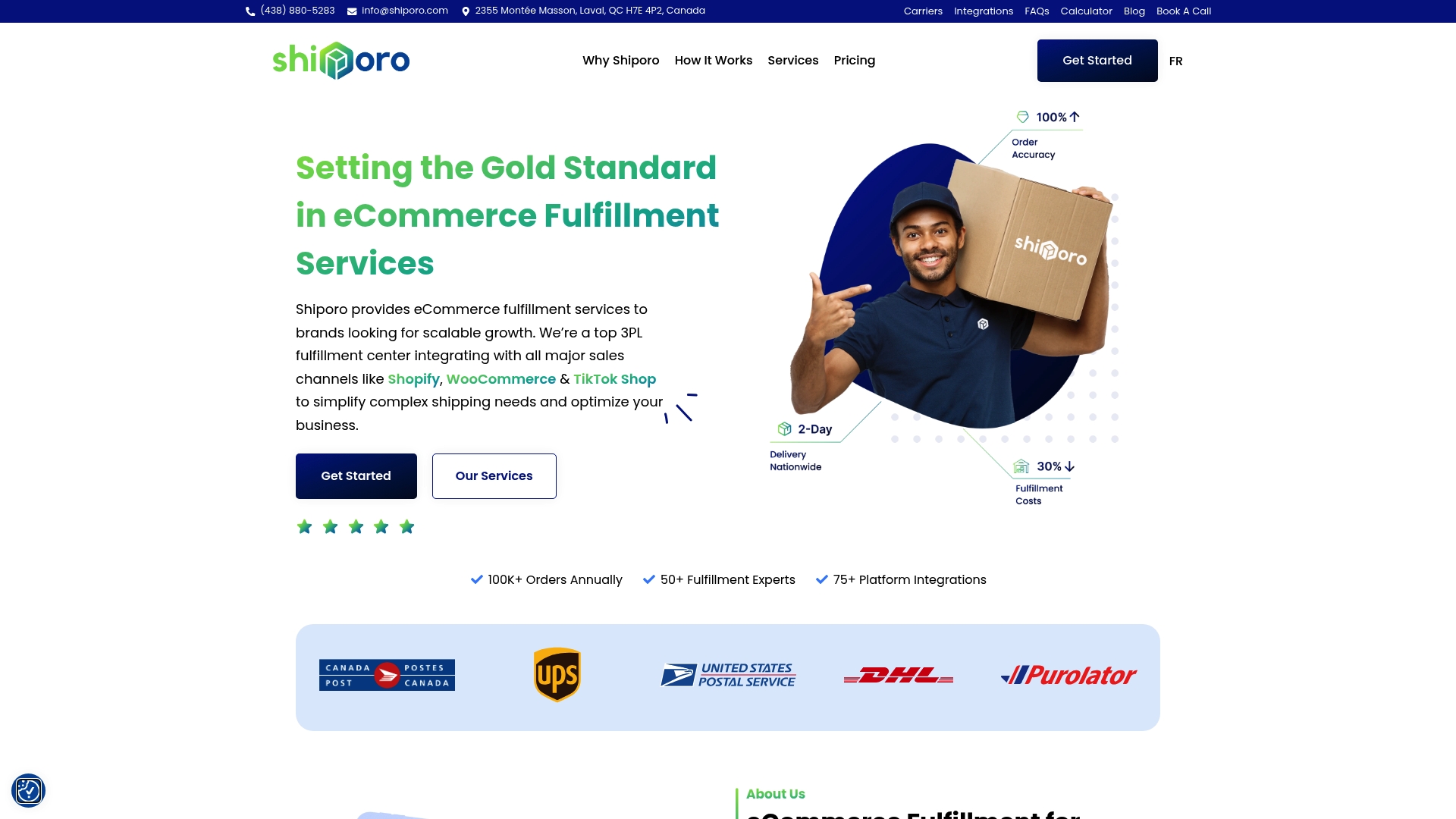
Shiporo handles the operational side so you can stay focused on your backers and your next product. As a Montreal-based 3PL, Shiporo uses Shiphero as its warehouse management system, a platform built specifically for direct-to-consumer fulfillment workflows. That matters for crowdfunding because the wave-based order volumes and multi-SKU reward tiers that overwhelm generic warehouse software are exactly what Shiphero is designed for.
Shiporo’s real-time carrier rate comparisons pull live pricing from Canada Post, FedEx, UPS, Purolator, and Intelcom on every shipment, syncing with top transport companies UK to ensure your brand always ships at the best available rate rather than a fixed contract price. Dedicated account managers provide a single point of contact for order accuracy questions, customs issues, and backer escalations. Shiporo also guarantees 100% order accuracy, integrates directly with Shopify and WooCommerce, and supports custom API connections for brands using other platforms.
Get a fulfillment cost estimate for your campaign with Shiporo’s pricing calculator, or reach out directly to discuss your reward tiers and backer geography.
Key takeaways
Successful crowdfunding fulfillment in Canada requires pre-launch planning, accurate customs documentation, right-sized packaging, and a 3PL partner that can absorb a sudden order spike without sacrificing accuracy.
| Point | Details |
|---|---|
| Plan before launch | Lock in your shipping model, duty handling, and fulfillment partner before your campaign goes live. |
| Customs clearance timing | Clean paperwork typically clears in 1–2 weeks; first-time importers should budget extra time for inspection. |
| Packaging affects margins | Right-sized cartons reduce dimensional weight charges across thousands of shipments. |
| Budget with a buffer | Add a contingency buffer to your fulfillment budget to cover surcharges and currency swings. |
| Shiporo for Canadian brands | Shiporo combines Shiphero WMS, real-time carrier rates, and dedicated account managers for accurate, scalable fulfillment. |
FAQ
What is the difference between crowdfunding fulfillment and regular eCommerce fulfillment?
Crowdfunding fulfillment involves a single large order spike after a campaign closes, with pre-orders collected upfront and shipped in bulk batches. Regular eCommerce fulfillment handles a steady daily flow of orders rather than one concentrated wave.
How long does customs clearance take for Canadian crowdfunding shipments?
Customs clearance typically takes 1–2 weeks when documentation is accurate. First-time importers are frequently selected for inspection, which can add additional weeks and exam fees to the timeline.
Should I use DDP or DDU for international backer shipping?
DDP (Delivered Duty Paid) is generally the better backer experience because recipients receive their package without surprise customs charges. DDU shifts that cost to the backer on arrival and is one of the most common sources of international fulfillment complaints.
How does Shiporo handle crowdfunding order volumes?
Shiporo uses Shiphero WMS, built for direct-to-consumer fulfillment, and provides dedicated account managers and a 100% order accuracy guarantee. Real-time rate comparisons across Canada Post, FedEx, UPS, Purolator, and Intelcom keep shipping costs competitive at any volume.
What budget contingency should I add to my fulfillment plan?
Add a contingency buffer on top of your storage, kitting, freight, duties, and returns costs to cover unexpected surcharges and currency fluctuations.

