

Apparel fulfillment is defined as the end-to-end process of receiving, storing, picking, packing, and shipping clothing products to customers. For Canadian brands, this process carries more weight than ever. Cross-border regulatory shifts, rising return rates, and growing consumer expectations for same-day delivery have made clothing order fulfillment a genuine competitive factor. The brands that get this right, using technology, flexible networks, and real-time data, will outpace those still treating fulfillment as a back-office cost centre.
What is apparel fulfillment and why it matters for Canadian brands
Apparel fulfillment is the operational backbone of any clothing brand selling online. It covers every step from the moment a customer clicks “buy” to the moment the parcel lands at their door. Inventory accuracy, fast pick-and-pack, and reliable shipping are the three pillars that determine whether a customer orders again or leaves a one-star review.
Canadian brands face a specific set of pressures. The USMCA trade agreement covers over half of Canadian exports and is under critical review in July 2026, creating real volatility for brands that ship south of the border. Add the elimination of the US Section 321 de minimis exemption in August 2025, and the cost of getting fulfillment wrong has risen sharply. Fashion fulfillment services that once relied on duty-free thresholds now need a fundamentally different approach.
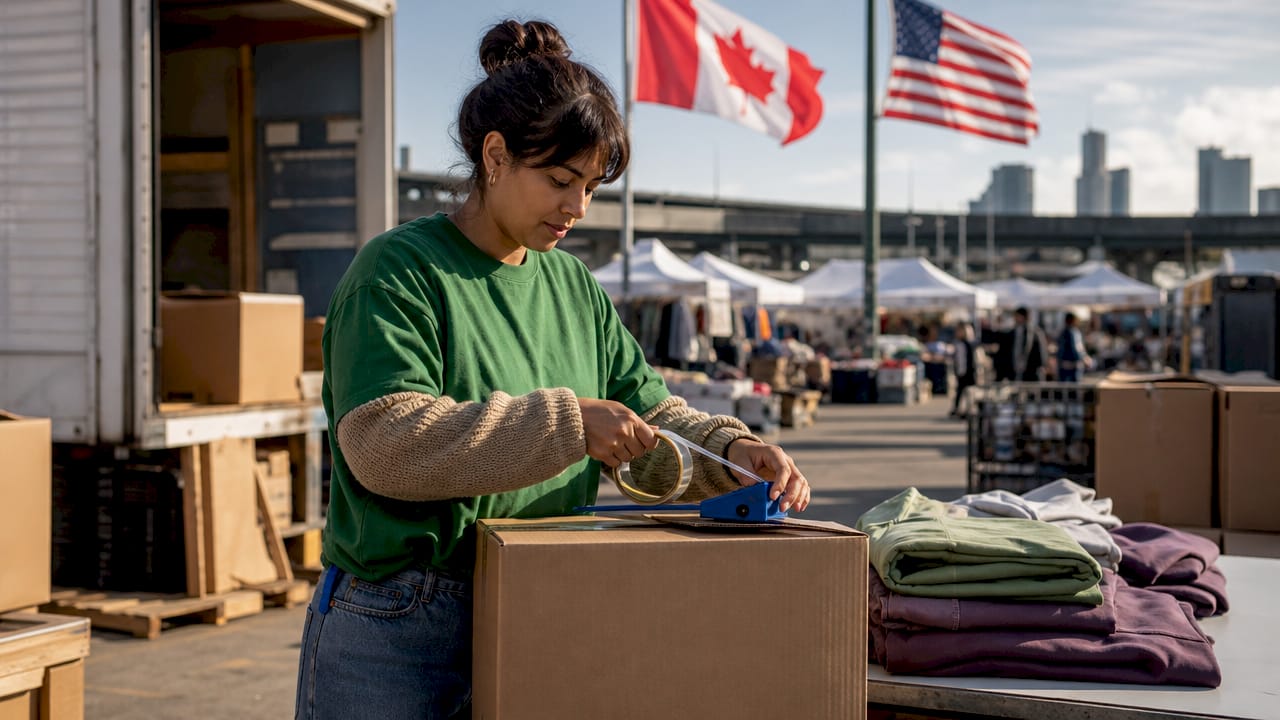
The industry term for the broader discipline is third-party logistics, or 3PL. When brands outsource to a 3PL, they hand off warehousing, order management, and shipping to a specialist. The brand keeps its focus on product and marketing. The 3PL handles the operational complexity.
Key criteria for choosing an apparel fulfillment solution
The right clothing fulfillment partner is not simply the cheapest one. Canadian retail logistics has shifted from pure cost efficiency to flexibility and network redundancy in 2026. That shift reflects hard lessons from supply chain disruptions that exposed how fragile single-node, cost-first strategies really are.
When evaluating a fulfillment partner, priorities these criteria:
- Data visibility and integration. Your fulfillment partner must connect directly with your Shopify or WooCommerce store. Real-time inventory data prevents stock outs and overselling, two problems that kill customer trust fast.
- Flexibility and network redundancy. A single warehouse is a single point of failure. Look for providers with multiple fulfillment nodes or the ability to reroute orders during disruptions.
- Regulatory compliance. Post de minimis elimination, every US-bound shipment requires proper customs documentation. Your 3PL must handle this without adding days to delivery times.
- Technology depth. AI-enabled analytics across sourcing, production, and distribution give brands a genuine competitive edge. Providers using automation and predictive tools outperform those relying on manual processes.
- Returns management. Higher eCommerce return rates in apparel make reverse logistics a core service requirement, not an optional add-on.
Pro Tip: Ask any prospective 3PL for their order accuracy rate before signing. Shiporo guarantees 100% order accuracy, which is the standard you should hold every provider to.
Fulfillment methods and technologies used by Canadian brands
Centralised vs. decentralised fulfillment
Centralised fulfillment uses one primary warehouse to serve all customers. It is simpler to manage and easier to maintain inventory accuracy. Decentralised fulfillment splits inventory across multiple regional nodes, reducing shipping distances and delivery times. The right model depends on your order volume, geographic spread, and cross-border requirements.
Many Canadian apparel brands start centralised and add nodes as volume grows. The risk of decentralization without proper data integration is that you simply relocate complexity rather than solve it. Moving production closer to demand can increase agility, but without integrated visibility into inventory and production performance, it creates new blind spots.
Automation and robotics in fulfillment centres
Enterprise-level apparel logistics solutions now rely heavily on robotics. Lululemon’s Brampton distribution centre, opened in June 2026, uses 525 robots and over 292,000 storage bins through AutoStore technology. That scale is not accessible to most growing brands, but it sets the benchmark for what automated picking accuracy and throughput look like.
Mid-market brands can access similar benefits through 3PL providers that have already invested in automation. Monorail transport systems, automated sorting, and high-density storage all reduce labour costs and picking errors. When you outsource to a tech-enabled 3PL, you effectively rent access to infrastructure that would cost millions to build independently.
Pro Tip: When touring a potential 3PL’s warehouse, ask specifically about their pick accuracy rate and how they handle size and colour variants. Apparel SKU complexity is where manual operations break down first.
Software ecosystems for order management
Disconnected systems prevent meaningful intelligence and slow response to disruptions. The best fashion fulfillment services run on unified software that connects order management, warehouse management, and carrier selection into one view. Brands that unify their operational data can use AI for predictive inventory management, catching demand spikes before they become stockouts.
How 2025–2026 regulatory changes affect your fulfillment strategy
The removal of the US Section 321 de minimis exemption on august 29, 2025 is the single biggest regulatory shift for Canadian apparel brands in a decade. Previously, shipments under $800 entered the US duty-free. That threshold is gone. Every parcel now requires formal customs entry, adding cost and time to every US-bound order.
The USMCA review in july 2026 adds further uncertainty. Brands that built their cross-border fulfillment models around duty-free thresholds need to restructure now, not after the review concludes. The practical steps include:
- Consolidate US fulfillment nodes. Multiple small US warehouses multiply customs costs. A single Foreign Trade Zone (FTZ) warehouse allows goods to enter customs-bonded, deferring duties until products are sold and shipped domestically within the US.
- Invest in customs documentation systems. Manual customs paperwork at scale is error-prone and slow. Automated documentation integrated with your order management system is now a baseline requirement.
- Model tariff scenarios. Dynamic management of multi-country networks requires modelling sourcing alternatives and scenarios. Brands without this capability are flying blind on landed cost.
- Work with a 3PL that has cross-border expertise. Shiporo’s cross-border fulfillment guide covers the documentation and carrier requirements that Canadian brands now face for US shipments.
For Quebec-based brands specifically, the combination of provincial regulations and new federal customs requirements makes local 3PL expertise particularly valuable.
What to look for in a scalable apparel fulfillment provider
Not all 3PL providers are built for apparel. Clothing fulfillment has specific requirements: size and colour variant management, high return rates, and seasonal demand swings. The provider you choose must handle all three without degrading service levels.
Providers generally fall into three categories. Boutique 3PLs serve small brands with personalized service but limited capacity. Regional providers offer broader warehouse networks and moderate technology investment. National and enterprise providers offer the deepest automation and the widest carrier networks, but often require minimum volume commitments that exclude early-stage brands.
Key service features to require from any provider:
- Omnichannel support. Your fulfillment partner must handle orders from your own website, Amazon, eBay, and Etsy without separate workflows. Marketplace fulfillment requires specific labelling and packaging standards that not all 3PLs support.
- Returns management. Higher eCommerce return rates in apparel make efficient reverse logistics critical. Ask how returned items are inspected, restocked, or disposed of, and what the turnaround time is.
- Sustainability reporting. Many Canadian fashion organizations still use manual processes for ESG reporting. Providers with automated sustainability tracking give brands a head start on transparency requirements that are tightening across retail.
- AI-driven inventory forecasting. Providers using predictive analytics reduce overstock and stockout risk. This is especially valuable for seasonal apparel lines where demand is volatile.
- Dedicated account management. A single point of contact who knows your SKU catalogue and your shipping priorities is worth more than a generic support queue.
When to outsource clothing order fulfillment
The right time to outsource is before fulfillment becomes a crisis, not after. The clearest signs that a brand is ready to hand off logistics include: order volumes that regularly exceed in-house packing capacity, shipping errors that generate customer complaints, and inventory discrepancies that take days to reconcile.
Preparing for the transition requires clean data. Before handing inventory to a 3PL, audit your SKU catalogue, confirm stock counts, and document your packaging requirements. Providers like Shiporo offer high-volume 3PL services with onboarding support, but the quality of your data at handoff directly determines how smooth the first weeks of operation will be.
Common challenges during the transition include integration delays between your eCommerce platform and the 3PL’s warehouse management system, and initial pick errors while staff learn your SKU variants. Both are manageable with clear communication and a phased go-live approach.
Pro Tip: Run a parallel period of two to four weeks where you track 3PL orders alongside your own internal records. Discrepancies caught early are far cheaper to fix than those discovered after a full cutover.
Key takeaways
The most effective apparel fulfillment strategy for Canadian brands combines tech-enabled 3PL infrastructure, unified operational data, and regulatory readiness for cross-border shipments.
| Point | Details |
|---|---|
| Regulatory readiness is non-negotiable | The removal of US de minimis in august 2025 means every US-bound order now requires formal customs documentation. |
| Data visibility drives performance | Unified operational data enables AI forecasting, reduces stockouts, and speeds up exception management. |
| Flexibility beats pure cost efficiency | Network redundancy and multiple fulfillment nodes protect brands from supply chain disruptions. |
| Returns management is a core requirement | High apparel return rates make reverse logistics a primary service criterion, not an afterthought. |
| Outsource before the crisis hits | Transition to a 3PL when volume strains capacity, not after errors start reaching customers. |
The shift I keep seeing Canadian apparel brands miss
After watching dozens of Canadian clothing brands navigate fulfillment decisions, the pattern I see most often is this: brands optimism for the cheapest rate per shipment and ignore everything else until something breaks. A carrier goes down. A warehouse floods. A customs rule changes overnight. Then they scramble.
The brands that scale without drama are the ones that treat fulfillment as a strategic function, not a commodity. They ask about network redundancy on the first call with a 3PL. They insist on real-time inventory data before signing anything. They model their landed cost to the US before the regulatory environment forces them to.
The 2026 USMCA review is the clearest example of why this matters. Brands that built their US strategy around the de minimis exemption are now repricing their entire product catalogue. Brands that had already invested in FTZ-compatible fulfillment and customs automation are barely affected. The difference was not budget. It was foresight.
My honest view is that the future of apparel logistics in Canada belongs to brands that treat data as infrastructure. Not just sales data, but inventory data, carrier performance data, and customs compliance data, all connected. The 3PL you choose should make that connection easier, not harder. If they cannot show you a real-time dashboard on day one of the conversation, keep looking.
— Luca
How Shiporo supports Canadian apparel brands at scale
Canadian apparel brands need a fulfillment partner that understands both the operational complexity of clothing logistics and the regulatory reality of cross-border shipping in 2026.
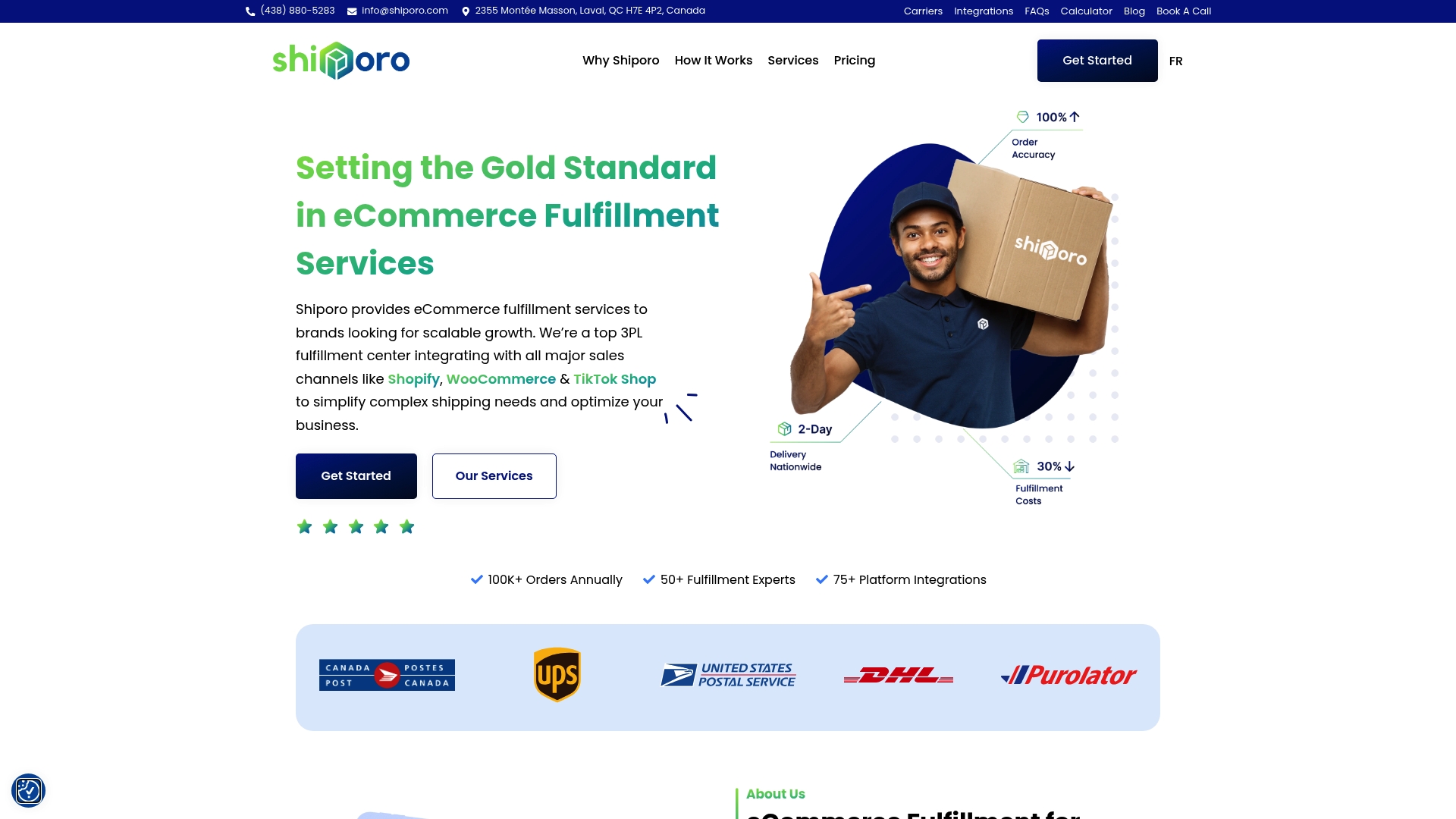
Shiporo’s eCommerce fulfillment services are built for brands that are growing and need a 3PL that grows with them. Shiporo integrates directly with Shopify and WooCommerce, provides real-time carrier rate comparisons, and backs every order with a 100% accuracy guarantee. Dedicated account managers mean your logistics questions get answered by someone who knows your catalogue, not a generic support queue. For Quebec-based apparel brands navigating new customs requirements and rising consumer expectations, Shiporo offers the local expertise and technology infrastructure to keep orders moving accurately and on time.
FAQ
What is apparel fulfillment?
Apparel fulfillment is the process of storing, picking, packing, and shipping clothing orders to customers. It includes inventory management, order processing, carrier selection, and returns handling.
How does the removal of US de minimis affect Canadian clothing brands?
The US eliminated the Section 321 duty-free exemption for shipments under $800 on august 29, 2025. Every US-bound order from Canadian brands now requires formal customs documentation and may be subject to import duties.
When should a clothing brand outsource to a 3PL?
A brand should outsource when order volumes exceed in-house packing capacity, shipping errors are generating customer complaints, or inventory discrepancies take more than a day to resolve.
What technology should a fashion fulfillment service offer?
A strong provider offers real-time inventory tracking, automated order management, AI-driven demand forecasting, and direct integration with major eCommerce platforms like Shopify and WooCommerce.
How do I reduce fulfillment costs for US-bound apparel shipments?
Consolidating US inventory into a single Foreign Trade Zone warehouse reduces customs duty costs. Working with a 3PL that offers real-time carrier rate comparisons also cuts per-shipment costs without sacrificing delivery speed.

